
Click the above Carbolic Smoke Ball metamorphic trade card image to see if this rare card is available on ebay.
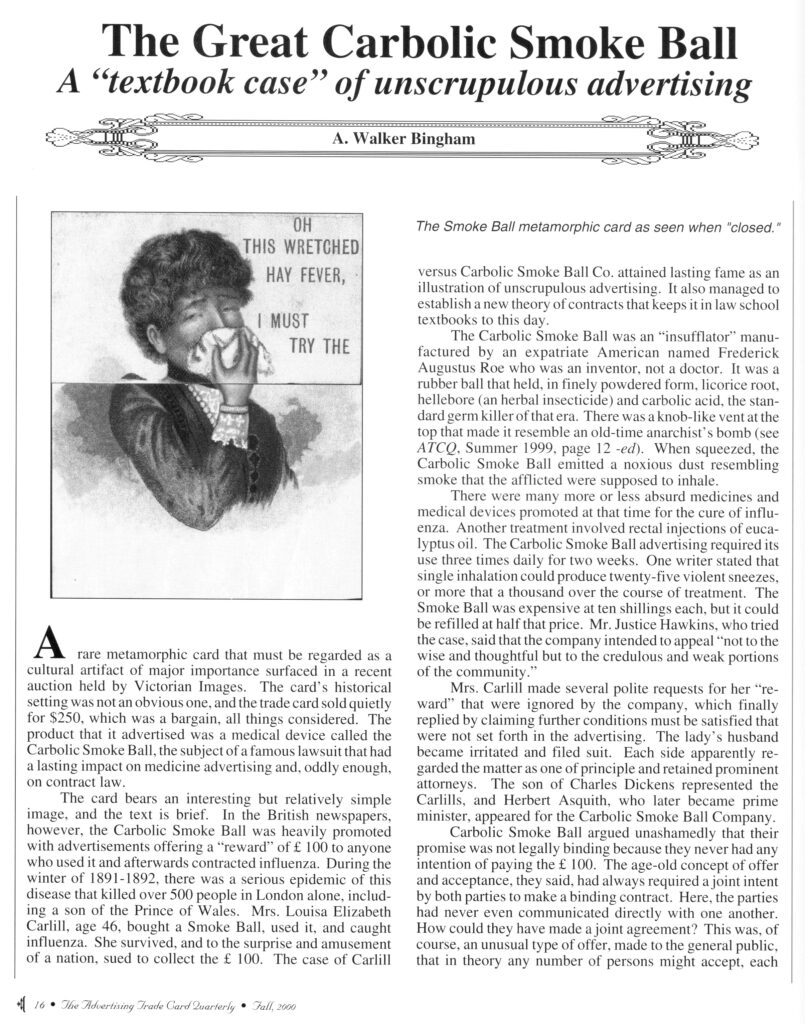
Click to see if this rare Carbolic Smoke Ball card is available:

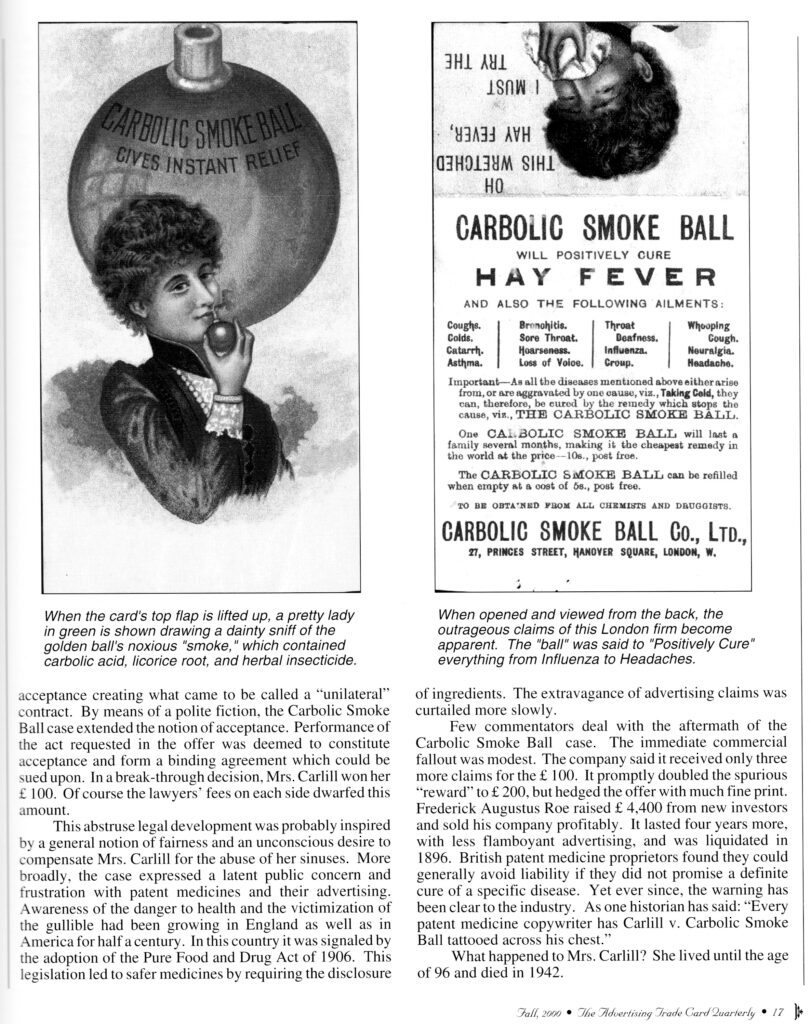
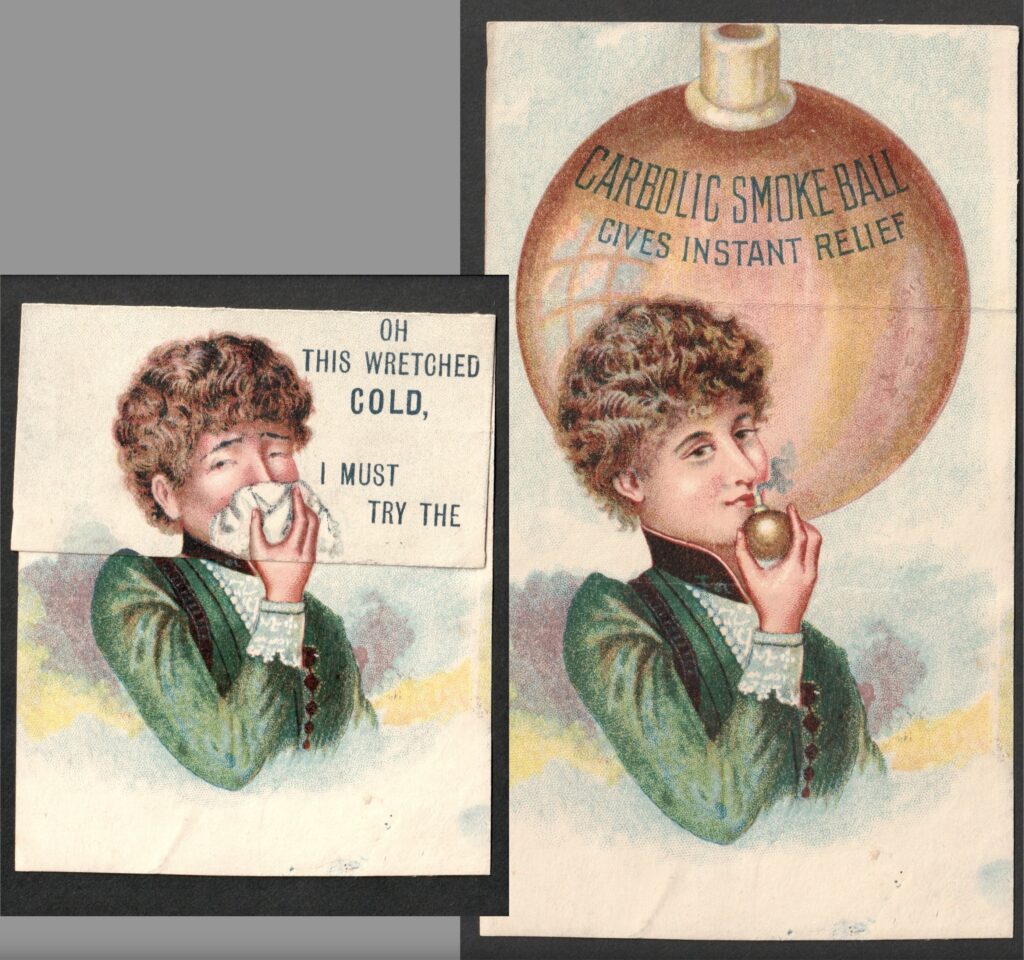
Click on above card to see if available on ebay
MORE from AI … The Carbolic Smoke Ball was a 19th-century, ineffective product that claimed to prevent influenza and other ailments, but it is primarily known for its role in the landmark English contract law case, Carlill v. Carbolic Smoke Ball Co. in 1893.
The Product
The “carbolic smoke ball” was a small rubber ball with a nozzle, containing a white powder made of carbolic acid (phenol). Users were instructed to inhale the powder three times a day for two weeks to prevent diseases. Carbolic acid is a harmful substance, and its use in this manner was a form of medical quackery; the product was an ineffective scam.
The Landmark Case: Carlill v. Carbolic Smoke Ball Co.
The product gained legal notoriety due to an advertisement placed by its manufacturer in London newspapers during an influenza epidemic.
The Advertisement: The company advertised that it would pay a £100 reward (a considerable sum at the time) to any person who used the smoke ball as directed and still contracted influenza or a related cold. To show their sincerity, they stated they had deposited £1,000 in the Alliance Bank.
The Claimant: A woman named Louisa Elizabeth Carlill bought and used the smoke ball as instructed, but still contracted the flu. She claimed the reward, but the company refused to pay, arguing the advertisement was a non-binding “mere puff” or sales gimmick.
The Ruling: The Court of Appeal unanimously ruled in favor of Mrs. Carlill. The court determined that the advertisement constituted a binding unilateral offer that she had accepted by fulfilling its conditions (buying and using the product as directed).
The Legal Significance: The case is a foundational element of contract law, particularly for first-year law students, as it clarified several key principles:
An offer can be made to the general public (the “world at large”), not just to a specific person.
Performing the conditions of a unilateral offer constitutes acceptance; there is no need for formal communication of acceptance.
The act of buying and using the product provided good “consideration” (something of value exchanged in the contract).
The reference to the £1,000 bank deposit demonstrated a genuine intention to be legally bound, rather than just engaging in puffery.
Today, the case is an example of the legal boundaries of advertising and the importance of clear intent in commercial promises.